
General information only. It does not replace advice from a health professional. Do not self-medicate with antibiotics. For fever with a rash, a stiff neck, confusion or difficulty breathing, call emergency services.
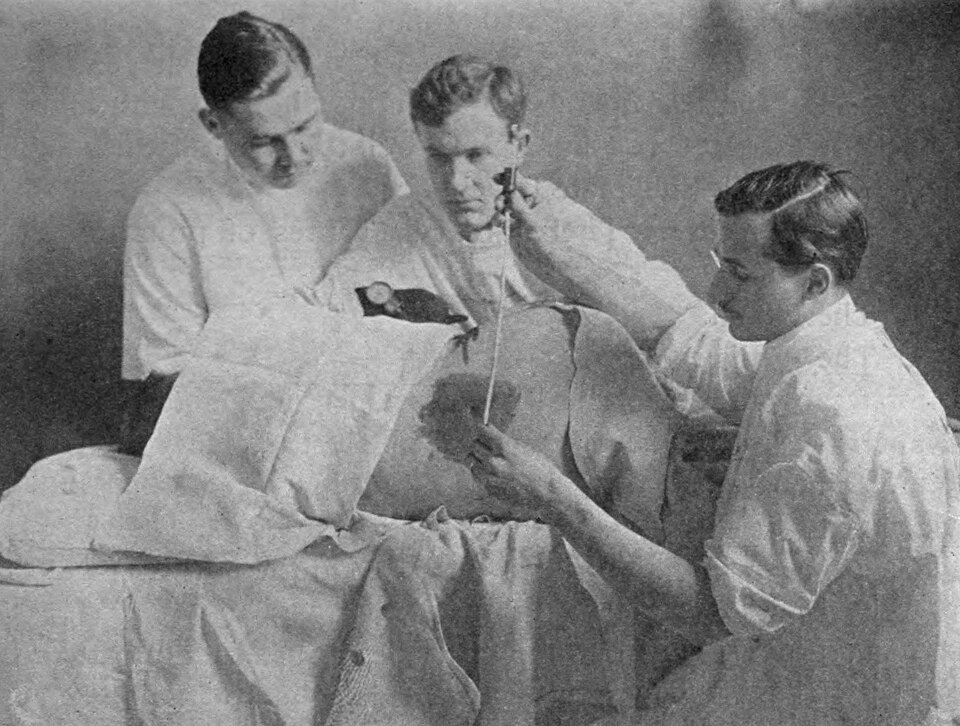

What it is
The meninges are three layers (dura mater, arachnoid and pia mater) that protect the central nervous system. Cerebrospinal fluid (CSF) circulates between the inner two. Meningitis is inflammation of these membranes and the CSF; when the inflammation also involves brain tissue it is called meningoencephalitis (see encephalitis).
It is classified by cause and by how it presents:
| Type | Typical causes | Course |
|---|---|---|
| Acute bacterial | Meningococcus, pneumococcus, Listeria, group B streptococcus, Haemophilus influenzae | Hours; 10-30% mortality despite treatment |
| Viral ("aseptic") | Enteroviruses, herpes simplex virus type 2, varicella-zoster, arboviruses, HIV | Days; almost always benign |
| Subacute or chronic | Tuberculosis, Cryptococcus, syphilis, Borrelia, Brucella | Weeks; after-effects common if treatment is delayed |
| Non-infectious | Drugs (ibuprofen, immunoglobulins), cancer, autoimmune disease | Variable |
Bacteria usually reach the meninges through the bloodstream, after colonising the nose and throat (meningococcus, pneumococcus), or by direct spread from otitis, sinusitis or a CSF leak after a head injury. Once in the CSF, where defences are scarce, they multiply and trigger intense inflammation that raises intracranial pressure and damages the brain.
In numbers
- According to the Global Burden of Disease 2019 study (Lancet Neurology, 2023), there were around 2.5 million cases of meningitis and 236,000 deaths worldwide in 2019. WHO calculates that one in five people who survive bacterial meningitis is left with long-term after-effects.
- In April 2025 WHO published its first global guidelines on meningitis diagnosis, treatment and care, part of the "Defeating meningitis by 2030" roadmap.
- In Spain, invasive meningococcal disease now has an incidence below 1 case per 100,000 per year, mostly serogroup B, with a recent rise in serogroups W and Y, according to RENAVE. In the UK, cases of invasive meningococcal disease have fallen sharply since MenB and MenACWY vaccines were introduced. Pneumococcus is the leading cause of bacterial meningitis in adults.
- Viral meningitis is far more common than bacterial, peaking in spring and summer because of enteroviruses.
Causes
Bacterial meningitis by age
| Age or situation | Most common bacteria | Pages |
|---|---|---|
| Newborns (< 1 month) | Group B streptococcus, E. coli, Listeria | S. agalactiae, E. coli, Listeria |
| 1 month-50 years | Pneumococcus, meningococcus (Haemophilus influenzae type b, now rare thanks to vaccination) | Pneumococcus, meningococcus, Haemophilus |
| > 50 years, pregnancy, alcohol dependence, immunosuppression | Pneumococcus, Listeria monocytogenes, Gram-negative bacilli | Same |
| After neurosurgery, shunt or head injury | Staphylococcus aureus, coagulase-negative staphylococci, Gram-negatives (Pseudomonas, Acinetobacter) | S. aureus, see brain abscess and other nervous system infections |
| CSF leak, cochlear implant, asplenia | Pneumococcus | — |
Viral and other meningitis
| Agent | Features | Page |
|---|---|---|
| Enteroviruses (echovirus, coxsackievirus) | 50-90% of viral cases; summer; children and young adults | Enteroviruses |
| Herpes simplex virus type 2 | Young adults; may recur (Mollaret's meningitis) | Herpes simplex |
| Varicella-zoster | With or without rash | Varicella-zoster |
| Arboviruses (Toscana virus, West Nile) | Summer; sandfly and mosquito bites | West Nile and arboviruses |
| HIV (acute infection), mumps | — | Measles, rubella and mumps |
| Mycobacterium tuberculosis | Subacute; cranial nerve palsies | Tuberculosis |
| Cryptococcus neoformans | People with advanced HIV | Cryptococcus |
Risk factors
- Age: under 1 year, adolescents and young adults (meningococcus), over 50-60 (pneumococcus, Listeria).
- Lack of vaccination against meningococcus, pneumococcus and Haemophilus.
- Asplenia (no spleen or a non-functioning one), complement deficiency or treatment with eculizumab or ravulizumab (very high meningococcal risk).
- Immunosuppression, HIV, diabetes, alcohol dependence, cancer.
- Cochlear implant, CSF leak, neurosurgery or head injury.
- Close living quarters (student halls, barracks) and travel to epidemic areas (the African "meningitis belt", the Hajj pilgrimage).
Symptoms
The classic triad (fever, neck stiffness and altered consciousness) is complete in fewer than half of adults with bacterial meningitis, but 95% have at least two of these four: headache, fever, neck stiffness and altered consciousness.
- Severe headache, unlike usual headaches.
- Fever, shivering.
- Neck stiffness: difficulty or pain bringing the chin to the chest.
- Nausea, vomiting, discomfort with light (photophobia).
- Confusion, drowsiness, irritability; in severe cases, coma.
- Seizures and focal signs (weakness, speech problems).
- Petechial or purpuric rash (red or purple spots that do not fade when pressed with a glass): highly suggestive of meningococcal sepsis.
- In babies: fever or low temperature, refusing feeds, vomiting, high-pitched or inconsolable crying, irritability when handled, drowsiness, a bulging fontanelle, seizures. Neck stiffness is often absent. See fever in children.
Viral meningitis causes a similar picture but generally without altered consciousness or signs of severity.
Act immediately: call 112 in Europe, or your local emergency number, for fever with severe headache and neck stiffness, confusion, drowsiness, seizures or spots that do not fade when pressed. Do not wait for all the symptoms to appear: bacterial meningitis can worsen within hours. See when to go to the emergency department with a fever.
Diagnosis
The first rule is not to delay treatment: if bacterial meningitis is suspected, blood cultures are taken and antibiotics and dexamethasone are given within the first hour, even if the lumbar puncture has to wait.
Main tests
- Lumbar puncture: the key test. Opening pressure is measured, and appearance, cells, glucose (compared with blood glucose), protein, lactate, Gram stain, culture and PCR are analysed.
- Blood cultures: positive in 50-80% of bacterial meningitis; essential if the lumbar puncture is delayed.
- Multiplex CSF PCR (panels that simultaneously detect meningococcus, pneumococcus, Listeria, enteroviruses, herpes and Cryptococcus, among others): results in 1-2 hours and useful when antibiotics have already been given.
- Blood tests: full blood count, clotting, CRP and procalcitonin; procalcitonin > 0.5 ng/mL supports a bacterial cause.
- Head CT before lumbar puncture only if there is: immunosuppression, previous nervous system disease, a recent seizure, papilloedema, a markedly reduced level of consciousness (Glasgow < 10-11 depending on the guideline) or a focal neurological deficit. In most cases it is not needed. See imaging in infections.
How CSF is interpreted
Reference values are detailed in cerebrospinal fluid values.
| Parameter | Normal (adult) | Bacterial | Viral | Tuberculous or fungal |
|---|---|---|---|---|
| Appearance | Clear, "gin-clear" | Cloudy, purulent | Clear | Clear or slightly cloudy |
| Opening pressure | 10-20 cm H₂O | Raised (> 25-30) | Normal or slightly raised | Raised (very high in cryptococcal) |
| White cells | < 5 cells/µL | > 1,000/µL (range 100-10,000) | 10-500/µL | 50-500/µL |
| Cell type | Lymphocytes | Neutrophils | Lymphocytes (neutrophils early on) | Lymphocytes |
| CSF glucose / blood glucose | ≥ 0.6 | < 0.4 | Normal | Low |
| Protein | 15-45 mg/dL (0.15-0.45 g/L) | > 100-200 mg/dL | Normal or slightly raised (< 100) | Very high (100-500) |
| Lactate | < 2.5 mmol/L | > 3.5-4 mmol/L | < 3.5 mmol/L | Raised |
| Gram / stains | — | Positive in 60-90% without prior antibiotics | Negative | Ziehl-Neelsen (low sensitivity), India ink or cryptococcal antigen |
None of these values is conclusive on its own; they are interpreted together and with the clinical picture. In children, scores such as the Bacterial Meningitis Score help identify those at very low risk. Prior antibiotics can "clear" the CSF and make the culture negative, but rarely normalise the cell count.
Treatment
The full scheme is in the bacterial meningitis treatment guide.
Bacterial meningitis: empirical treatment
| Situation | Usual empirical treatment in Spain (ESCMID 2016, adapted) | Comments |
|---|---|---|
| Newborns | Ampicillin + cefotaxime (or gentamicin) | Covers group B streptococcus, E. coli and Listeria |
| Children and adults < 50 | High-dose cefotaxime or ceftriaxone + vancomycin | Vancomycin covers cephalosporin-resistant pneumococcus; stopped if susceptible |
| > 50, pregnancy, alcohol dependence, immunosuppression | The above + ampicillin or amoxicillin | Covers Listeria (resistant to all cephalosporins) |
| After neurosurgery or with a shunt | Vancomycin + meropenem or cefepime or ceftazidime | Covers staphylococci and Pseudomonas |
| Severe beta-lactam allergy | Vancomycin + moxifloxacin (or aztreonam); co-trimoxazole if Listeria cover is needed | Individualise |
WHO (2025) recommends ceftriaxone or cefotaxime as empirical treatment, started as soon as possible; NICE NG240 (2024) also recommends ceftriaxone, adding Listeria cover in older and immunocompromised people. Because pneumococcal resistance to cephalosporins is rare in the UK, vancomycin is added there mainly after recent travel to areas with resistance.
Targeted treatment and duration
| Organism | Antibiotic of choice | Approximate duration |
|---|---|---|
| N. meningitidis | Benzylpenicillin, ampicillin or ceftriaxone | 5-7 days |
| Penicillin-susceptible S. pneumoniae | Benzylpenicillin or ampicillin | 10-14 days |
| Penicillin-resistant, cephalosporin-susceptible S. pneumoniae | Cefotaxime or ceftriaxone | 10-14 days |
| H. influenzae | Ceftriaxone or cefotaxime | 7-10 days |
| Listeria monocytogenes | Ampicillin/amoxicillin (± gentamicin); alternative, co-trimoxazole | ≥ 21 days |
| Group B streptococcus | Benzylpenicillin or ampicillin | 14-21 days |
| Gram-negative bacilli | According to susceptibility (3rd- or 4th-generation cephalosporin, meropenem) | 21 days |
Dexamethasone
In adults with suspected pneumococcal meningitis or bacterial meningitis of unclear cause, dexamethasone (10 mg intravenously every 6 hours in adults, 0.15 mg/kg in children, for 4 days) is given just before or with the first antibiotic dose. It reduces mortality and deafness in pneumococcal meningitis in high-income countries. It is stopped if a cause other than pneumococcus or Haemophilus is confirmed (its benefit in meningococcal disease is doubtful, although it is often completed once started).
Supportive care
- Monitoring in a high-dependency or intensive care unit if there is altered consciousness, seizures or sepsis (see sepsis and septic shock).
- Control of seizures, intracranial pressure, sodium and glucose; fluids without routine restriction.
- Respiratory isolation for the first 24 hours of antibiotics if meningococcus or Haemophilus is suspected.
Viral meningitis
There are no effective antivirals against enteroviruses: treatment is supportive (pain relief, fluids, rest). If bacterial meningitis cannot be excluded, antibiotics are started until the results are known. If herpes is suspected or there are signs of encephalitis, intravenous aciclovir is added.
Prognosis and complications
- Bacterial meningitis still carries a mortality of 5-15% for meningococcal disease (up to 40% with fulminant sepsis) and 15-30% for pneumococcal meningitis in adults.
- Up to 20-50% of survivors of pneumococcal meningitis have after-effects: deafness (the most common; a hearing test is recommended after discharge), memory and concentration problems, epilepsy, motor deficits and hydrocephalus. In meningococcal sepsis, amputations and skin grafts may be needed.
- Acute complications: brain swelling, seizures, strokes, venous sinus thrombosis, subdural empyema, low sodium.
- Viral meningitis almost always heals without after-effects, although headache and fatigue can last for weeks.
Prevention
Vaccines
Vaccines have changed the history of meningitis: the Haemophilus influenzae type b vaccine has almost eliminated it in childhood. See vaccines and the vaccination schedule.
| Vaccine | Spain's common schedule (2026) |
|---|---|
| Haemophilus influenzae type b | 2, 4 and 11 months (in the hexavalent vaccine) |
| Pneumococcal conjugate | 2, 4 and 11 months; adults ≥ 65 and risk groups |
| Meningococcal B | 2, 4 and 12 months |
| Meningococcal ACWY | 4 and 12 months (replacing MenC from 1 January 2026) and one dose at 12 years |
| Risk groups (asplenia, complement deficiency, eculizumab) | Extended MenACWY, MenB and pneumococcal schedules at any age |
| Travellers to the African belt or the Hajj | MenACWY (compulsory for the pilgrimage) |
In the UK, MenB is given in infancy and MenACWY is offered to teenagers and first-time university students; check the current NHS schedule.
Prophylaxis for contacts
After a case of meningococcal meningitis (or Haemophilus type b), public health teams recommend chemoprophylaxis for close contacts (household members, people who slept in the same room, nursery contacts, anyone with direct contact with secretions), ideally within 24 hours and up to 10 days after contact. More in post-exposure prophylaxis.
| Drug | Usual regimen | Notes |
|---|---|---|
| Ciprofloxacin | Single oral dose (500 mg in adults) | Convenient; also used in children under current protocols |
| Rifampicin | 2 days, every 12 hours | Colours urine; interacts with contraceptives |
| Ceftriaxone | Single intramuscular dose | First choice in pregnancy |
Pneumococcal and viral meningitis do not require prophylaxis for contacts.
Infectiousness and isolation
- Meningococcus spreads through respiratory secretions in close contact; a person stops being infectious 24 hours after starting effective antibiotics.
- Pneumococcus and Listeria are not, in practice, passed from person to person.
- Enteroviruses spread by the faecal-oral and respiratory routes: wash your hands, especially after changing nappies.
- A child or adult recovering from meningitis can return to school or work when well; classmates do not usually need prophylaxis unless public health advises it.
Myths and facts
- "All meningitis is fatal." False: most cases are viral and mild. But bacterial meningitis is an emergency and cannot be told apart at home.
- "No rash means no meningitis." False: many cases of bacterial meningitis, especially pneumococcal, have no rash.
- "A lumbar puncture can paralyse you." False: the needle goes in below where the spinal cord ends. The commonest problem is a temporary post-puncture headache.
- "You should get vaccinated against meningitis when there is an outbreak." Vaccines protect best when given on schedule; in an outbreak, public health decides whether extra vaccination is needed.
- "Contacts of any meningitis need antibiotics." Only for meningococcal and Haemophilus type b disease.
Questions to ask your doctor
- Is it viral or bacterial? Which organism has been found?
- How long will treatment last?
- Does my family need prophylaxis?
- Will there be after-effects? Will I have a hearing test?
- Are we all properly vaccinated?
- Do I have any factor (CSF leak, asplenia, immunosuppression) that could make it happen again?
Sources
- World Health Organization. WHO guidelines on meningitis diagnosis, treatment and care. Geneva: WHO; April 2025.
- National Institute for Health and Care Excellence. Meningitis (bacterial) and meningococcal disease: recognition, diagnosis and management (NG240). London: NICE; March 2024.
- van de Beek D, et al. ESCMID guideline: diagnosis and treatment of acute bacterial meningitis. Clin Microbiol Infect. 2016;22(Suppl 3):S37-62. doi:10.1016/j.cmi.2016.01.007
- GBD 2019 Meningitis Antimicrobial Resistance Collaborators. Global, regional, and national burden of meningitis and its aetiologies, 1990-2019. Lancet Neurol. 2023;22:685-711.
- Ministerio de Sanidad. Common lifelong vaccination and immunisation schedule, 2026. Interterritorial Council of the National Health System; 2025.
- Centro Nacional de Epidemiología, ISCIII. Meningococcal disease surveillance protocol and RENAVE annual reports.
- van de Beek D, et al. Community-acquired bacterial meningitis. Nat Rev Dis Primers. 2016;2:16074.
- Brouwer MC, et al. Corticosteroids for acute bacterial meningitis. Cochrane Database Syst Rev. 2015;(9):CD004405. doi:10.1002/14651858.cd004405.pub5
- Tunkel AR, et al. Practice guidelines for the management of bacterial meningitis. Clin Infect Dis. 2004;39:1267-84. doi:10.1086/425368
- NHS. Meningitis.
Sources reviewed and updated in November 2026.
History · Medicapedia
The history of this condition
How it was described, who studied it and how its treatment has changed over the centuries, on Medicapedia, our sister encyclopedia of the history of medicine.