
General information only. It does not replace advice from a health professional. Do not self-medicate with antibiotics. For fever with a rash, a stiff neck, confusion or difficulty breathing, call emergency services.

What it is
Vaginitis is inflammation of the vagina (and often of the vulva: vulvovaginitis) causing abnormal discharge, itching, burning, irritation, pain during sex or odour. It is one of the commonest gynaecological reasons for seeing a GP.
To understand it, it helps to know the healthy vagina. In women of reproductive age, its microbiota is dominated by lactobacilli (Lactobacillus crispatus, L. iners, L. gasseri, L. jensenii). Thanks to oestrogen, the vaginal lining stores glycogen; lactobacilli convert it into lactic acid, which keeps the pH acidic (3.8-4.5) and, together with other substances, holds other microbes in check. Normal discharge is whitish or clear, without a bad smell, and varies through the cycle.
The three main causes are:
| Cause | What happens | Approximate share of cases |
|---|---|---|
| Bacterial vaginosis | Lactobacilli are replaced by a community of anaerobic bacteria (Gardnerella, Fannyhessea —formerly Atopobium—, Prevotella, Mobiluncus and others) that form a biofilm | 40-50% |
| Vulvovaginal candidiasis (thrush) | Overgrowth of Candida yeasts, mainly C. albicans | 20-25% |
| Trichomoniasis | Infection with the sexually transmitted parasite Trichomonas vaginalis | 15-20% (varies widely by population) |
Other causes include atrophic vaginitis or genitourinary syndrome of menopause (lack of oestrogen), aerobic vaginitis (streptococci, Enterobacterales, S. aureus), desquamative inflammatory vaginitis, irritation or allergy (soaps, douches, lubricants, panty liners), foreign bodies (a forgotten tampon) and vulval skin conditions. Cervicitis due to chlamydia or gonorrhoea can also cause discharge and must be ruled out.
In numbers
- Bacterial vaginosis is the commonest cause of abnormal discharge in women of reproductive age. Systematic reviews estimate a global prevalence of around 23-29%, with large regional differences; in Europe it is around 10-20%. Up to half of cases cause no symptoms.
- After treatment, bacterial vaginosis returns in more than half of women within 6-12 months.
- An estimated three in four women will have at least one episode of vulvovaginal thrush in their lifetime, and 5-8% have recurrent thrush (3 or more episodes a year).
- Trichomoniasis is the commonest curable STI in the world: the WHO estimated 156 million new infections in 2020. In Spain it is not notifiable and is seen far less often in clinics than in other parts of the world.
Causes and risk factors
| Organism or cause | Factors that favour it | Page |
|---|---|---|
| Bacterial vaginosis (Gardnerella and anaerobes) | A new or multiple sexual partners, a female partner with BV, vaginal douching, smoking, copper intrauterine device, menstruation | Anaerobes |
| Candida albicans and other species (C. glabrata) | Recent antibiotics, pregnancy, poorly controlled diabetes, high-oestrogen contraceptives, immunosuppression, SGLT2 inhibitors | Candida |
| Trichomonas vaginalis | Condomless sex, other STIs, older age (unlike other STIs, it is also common over 40) | Trichomonas |
| Atrophy | Menopause, breastfeeding, anti-oestrogen treatments | — |
Although bacterial vaginosis has not traditionally been considered an STI, there is growing evidence that it is sexually transmitted: it is rare in women who have never had sex, increases with new partners and is concordant between female partners. The StepUp trial (Vodstrcil and colleagues, N Engl J Med, 2025) has strengthened this (see Treatment). Thrush, by contrast, is not an STI.
Symptoms
| Bacterial vaginosis | Thrush | Trichomoniasis | |
|---|---|---|---|
| Discharge | Thin, uniform, grey-white, coating the walls | White, thick, lumpy ("cottage cheese"), adherent | Profuse, yellow-green, sometimes frothy |
| Odour | Fishy, worse after periods or sex | No odour | Unpleasant |
| Itching and burning | Little or none | Intense, red and swollen vulva, fissures | Common; burning on passing urine |
| Vaginal pH | > 4.5 | Normal (≤ 4.5) | > 4.5 |
| Other | Half have no symptoms | Pain during sex | "Strawberry cervix" (uncommon); in men, urethritis or no symptoms |
Symptoms overlap and two causes may coexist, so diagnosis by describing the discharge often fails. Itching is not always thrush: many women who self-treat with antifungals actually have another cause.
Warning signs: seek prompt advice if you have fever, lower abdominal pain or pain during sex, bleeding outside your period or after sex, genital ulcers or sores, or if you are pregnant. Go to A&E if you have high fever with severe abdominal pain, feel very unwell or have heavy bleeding: these may point to pelvic inflammatory disease or another gynaecological emergency.
Diagnosis
Examination and point-of-care tests
- Examination of the vulva and vagina with a speculum: appearance of the discharge, redness, cervical lesions.
- Vaginal pH with a strip: above 4.5 suggests BV or trichomoniasis; normal suggests thrush.
- Amine ("whiff") test: adding potassium hydroxide to the discharge releases a fishy odour in BV and trichomoniasis.
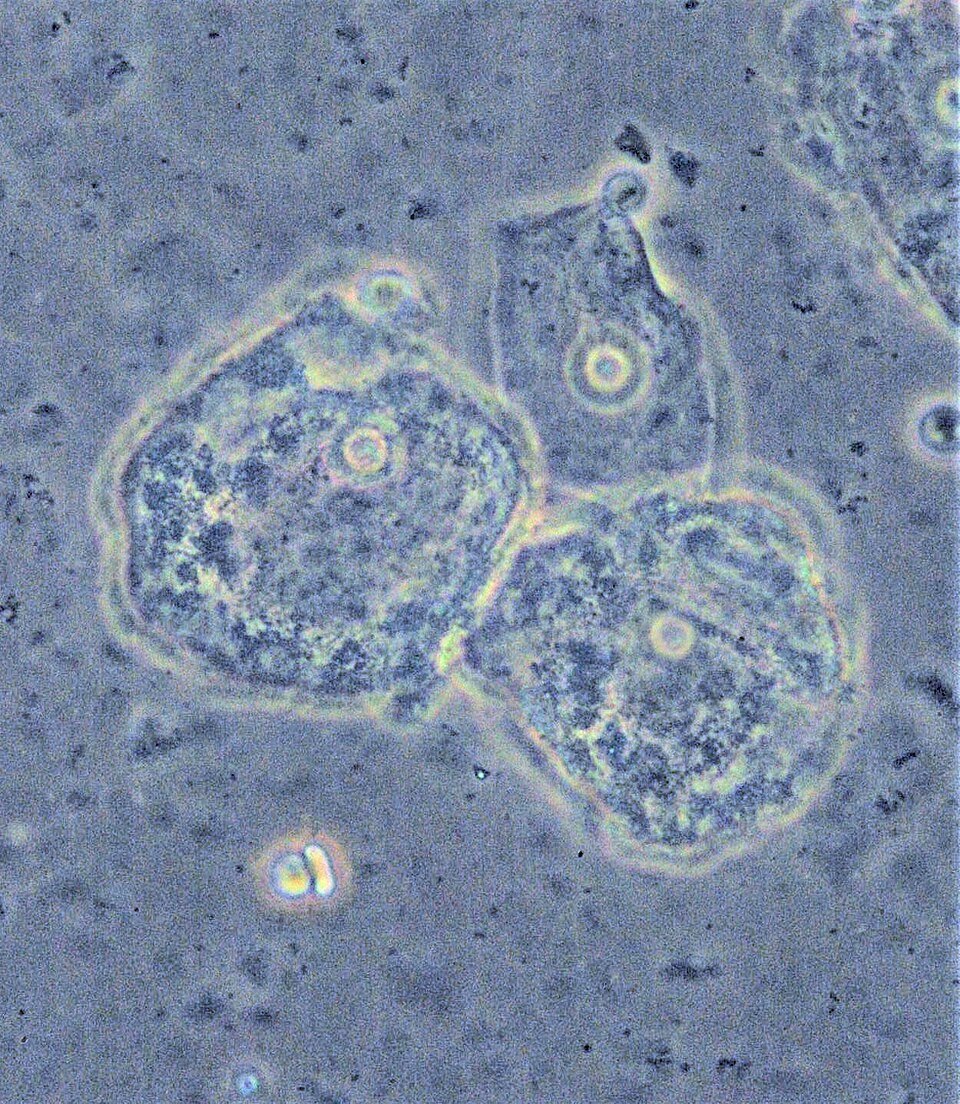
- Microscopy, wet mount and with potassium hydroxide: clue cells (epithelial cells covered in bacteria), yeasts and pseudohyphae or motile trichomonads. See Gram stain and microscopy.
Diagnostic criteria for bacterial vaginosis
| Method | Criterion | Comment |
|---|---|---|
| Amsel criteria (clinical) | 3 of 4: thin uniform discharge; pH > 4.5; positive amine test; clue cells > 20% of epithelial cells | Quick; need a microscope |
| Nugent score (Gram stain) | 0-3 normal; 4-6 intermediate; 7-10 BV | Research reference standard; counts lactobacilli, Gardnerella and curved rods |
| NAAT or multiplex molecular tests | Quantitative detection of BV-associated bacteria | Increasingly used; often include Candida and Trichomonas |
Culture is not useful for diagnosing BV: Gardnerella is found in many healthy women.
Thrush
Diagnosis is based on symptoms and seeing yeasts under the microscope. Culture of the discharge (see culture and identification) is kept for recurrent or non-responding cases, to identify species other than C. albicans (such as Nakaseomyces glabratus, formerly C. glabrata) that are less susceptible to fluconazole. Finding Candida without symptoms needs no treatment: up to 10-20% of healthy women carry it in the vagina.
Trichomoniasis
NAAT on a vaginal swab (or urine in men) is the test of choice, with sensitivity above 95%; wet-mount microscopy detects half of cases or fewer. See PCR and molecular tests. With trichomoniasis, tests for the other STIs, including HIV and syphilis, are offered.
Treatment
Do not keep self-treating: vaginal antifungals are sold over the counter, but if symptoms keep coming back or do not clear, the diagnosis needs confirming. BV or thrush without symptoms should generally not be treated (with some exceptions).
Bacterial vaginosis
| Treatment | Usual regimen | Comment |
|---|---|---|
| Oral metronidazole | 400-500 mg twice daily for 5-7 days (7 days in CDC guidance) | First choice (CDC, IUSTI/WHO, BASHH) |
| Metronidazole vaginal gel 0.75% | Once daily for 5 days | Similar efficacy, fewer gut side effects |
| Clindamycin vaginal cream 2% | Once at bedtime for 7 days | Can weaken latex condoms for a few days |
| Alternatives | Oral tinidazole; oral clindamycin; secnidazole (not marketed in every country) | Depending on availability |
- Metronidazole can cause a metallic taste, nausea and, as traditionally stated, a reaction with alcohol; recent studies do not clearly confirm it, but many leaflets still advise avoiding alcohol (see alcohol and antibiotics).
- Treating the male partner: the StepUp trial (Vodstrcil and colleagues, N Engl J Med, March 2025) enrolled monogamous couples in which the woman had BV. Also treating the man with oral metronidazole and clindamycin cream applied to the penis for 7 days cut recurrence at 12 weeks from 63% to 35% (hazard ratio 0.37), and the trial was stopped early because of the benefit. In December 2025, the American College of Obstetricians and Gynecologists (ACOG) issued an update recommending concurrent partner therapy in some cases of recurrent BV. European, UK and Spanish guidelines have not yet broadly incorporated it; discuss it with your clinician.
- Recurrences (3 or more a year): metronidazole gel twice weekly for 4-6 months after a full course; sometimes vaginal boric acid beforehand.
- Pregnancy: symptomatic BV is treated (oral or vaginal metronidazole, or clindamycin), which is safe. Routine screening and treatment of pregnant women without symptoms has not been shown to reduce preterm birth in the general population.
Vulvovaginal thrush
| Situation | Treatment | Comment |
|---|---|---|
| Uncomplicated thrush | Vaginal azole (clotrimazole, miconazole, fenticonazole: pessary or cream for 1-7 days) or oral fluconazole 150 mg single dose | Similar efficacy (80-90%); see antifungals |
| Pregnancy | Vaginal treatment only (clotrimazole for 7 days) | Avoid oral fluconazole, especially in the first trimester |
| Severe thrush | Fluconazole 150 mg, 2 or 3 doses 72 hours apart | — |
| Recurrent thrush (≥ 3 episodes a year) | Induction with fluconazole 150 mg every 72 hours (3 doses), then 150 mg weekly for 6 months | Confirm with culture; relapses are common when stopped |
| C. glabrata or other resistant species | Vaginal boric acid 600 mg for 14 days | Toxic if swallowed; never by mouth and keep away from children |
In the USA, oteseconazole has been approved since 2022 for recurrent thrush in women who cannot become pregnant; it is not marketed in Spain. The male partner does not need treatment unless he has balanitis.
Trichomoniasis
| Person | Treatment of choice | Alternative |
|---|---|---|
| Women | Metronidazole 500 mg twice daily for 7 days | Tinidazole 2 g single dose |
| Men | Metronidazole 2 g single dose | Metronidazole for 7 days |
| Pregnancy | Metronidazole for 7 days (safe in any trimester) | — |
The 7-day regimen for women replaced the 2 g single dose after a trial (Kissinger and colleagues, Lancet Infect Dis, 2018) showed half as many failures (11% versus 19%). Sexual partners must be treated, sex avoided until both have finished treatment, and the test repeated at 3 months because of high reinfection rates.
Atrophic vaginitis
Treated with vaginal moisturisers and lubricants and, if needed, low-dose vaginal oestrogen, which also reduces recurrent urinary infections.
Outlook and complications
- Vaginitis is not serious in most cases, but recurrences greatly affect quality of life, relationships and emotional wellbeing.
- Bacterial vaginosis is linked to a higher risk of acquiring STIs and HIV, pelvic inflammatory disease, infection after gynaecological surgery or abortion and, in pregnancy, preterm birth, premature rupture of membranes and infection of the amniotic fluid.
- Trichomoniasis increases the risk of HIV, preterm birth and low birth weight.
- Recurrent thrush can cause chronic vulval pain and sexual difficulties.
Prevention
- Avoid vaginal douching and perfumed soaps: they disturb the microbiota and increase BV. For intimate hygiene, water or a mild cleanser on the vulva is enough, never inside the vagina.
- Condoms: reduce BV and trichomoniasis.
- Avoid unnecessary antibiotics (see antimicrobial stewardship): they are the main trigger for thrush.
- Keep diabetes under control.
- Breathable underwear and avoiding prolonged dampness (reasonable measures, though with little evidence).
- Probiotics: some trials with vaginal lactobacilli (such as L. crispatus CTV-05 in a phase 2b trial published in N Engl J Med in 2020) have reduced BV recurrences after treatment, but commercially available products have limited and variable evidence. See probiotics.
- For trichomoniasis, the general measures of sexual health.
Contagiousness and isolation
- Bacterial vaginosis: linked to sexual activity; avoid sex or use condoms during treatment. Female partners can share it.
- Thrush: not considered sexually transmissible; partners do not need treatment.
- Trichomoniasis: an STI; no sex until the person and their partners have completed treatment and symptoms have gone.
- None requires time off work or school, or isolation.
Myths and facts
- "All vaginal itching is thrush." False: many women who treat themselves with antifungals have BV, trichomoniasis, irritation or atrophy.
- "Washing inside prevents infections." False: douching promotes them.
- "BV is due to poor hygiene." False: it is an imbalance of the microbiota; over-washing makes it worse.
- "Yoghurt in the vagina cures thrush." There is no evidence and it can irritate.
- "If my partner has no symptoms, they don't need treatment." In trichomoniasis they must always be treated; in recurrent BV, treating the male partner reduces relapses.
Questions to ask your doctor
- What is causing my discharge? Will you check the pH or take a swab?
- Do I need to be tested for any STIs?
- Should my partner be treated?
- What should I do if it comes back? Do I need maintenance treatment?
- If I am pregnant, which treatment is safe?
- Which hygiene products can I use and which should I avoid?
Sources
- Vodstrcil LA, et al. Male-partner treatment to prevent recurrence of bacterial vaginosis. N Engl J Med. 2025;392:947-57. PubMed.
- American College of Obstetricians and Gynecologists. Clinical Practice Update: sexual partner therapy for recurrent bacterial vaginosis. Obstet Gynecol. 2025.
- Workowski KA, et al. Sexually Transmitted Infections Treatment Guidelines, 2021. MMWR Recomm Rep. 2021;70(4):1-187. Bacterial vaginosis.
- Sherrard J, et al. 2018 European (IUSTI/WHO) International Union against Sexually Transmitted Infections (IUSTI) World Health Organization (WHO) guideline on the management of vaginal discharge. Int J STD AIDS. 2018;29:1258-72. doi:10.1177/0956462418785451
- Kissinger P, et al. Metronidazole 7-day versus single-dose treatment for Trichomonas vaginalis in women: a randomised controlled trial. Lancet Infect Dis. 2018;18:1251-9.
- Cohen CR, et al. Randomized trial of Lactin-V to prevent recurrence of bacterial vaginosis. N Engl J Med. 2020;382:1906-15.
- World Health Organization. Sexually transmitted infections (STIs): fact sheet.
- British Association for Sexual Health and HIV (BASHH). Clinical guidelines: bacterial vaginosis, vulvovaginal candidiasis and Trichomonas vaginalis.
- Spanish Ministry of Health. STI Response Roadmap 2026-2030 (in Spanish).
- MedlinePlus. Vaginitis.
Sources reviewed and updated in November 2026.
History · Medicapedia
The history of this condition
How it was described, who studied it and how its treatment has changed over the centuries, on Medicapedia, our sister encyclopedia of the history of medicine.
Medicines · Farmacos.ai
Drug information pages
What each medicine is for, how to take it, side effects and interactions, based on the official product information, on Farmacos.ai.