
General information only. It does not replace advice from a health professional. Do not self-medicate with antibiotics. For fever with a rash, a stiff neck, confusion or difficulty breathing, call emergency services.

What it is and why it works
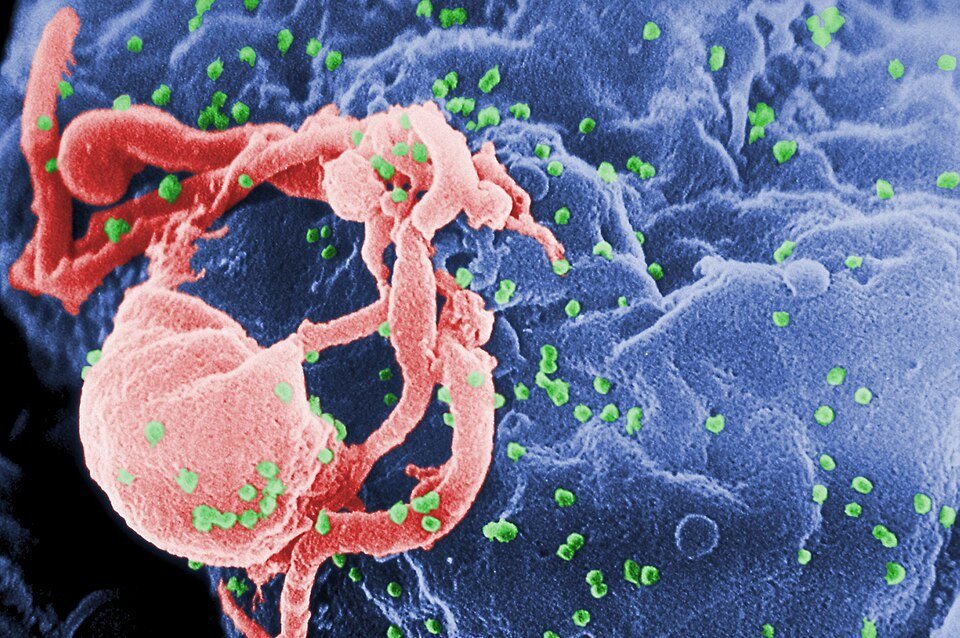
HIV is a retrovirus: it converts its RNA into DNA (reverse transcription), inserts that DNA into the genome of CD4 lymphocytes and uses them as factories for new viruses. Without treatment, HIV infection gradually destroys CD4 cells and, after an average of 8-10 years, AIDS develops, with opportunistic infections and tumours.
Antiretroviral therapy (ART) blocks different steps in this cycle. Combinations (two or three active drugs) are always used because HIV copies its genetic material with many errors and, with a single drug, resistant variants quickly emerge. This strategy, introduced in 1996 (the former "HAART"), turned a fatal disease into a manageable chronic infection.
ART does not cure: the virus remains "dormant" in a reservoir of long-lived cells. If treatment is stopped, the viral load rises again within weeks. That is why it is lifelong, unless cure strategies, currently only in research, become available.
Classes of antiretrovirals
| Class | Where it acts | Most used drugs | Key features |
|---|---|---|---|
| Nucleoside reverse transcriptase inhibitors (NRTIs) | Copying RNA into DNA | Tenofovir (TAF or TDF), emtricitabine, lamivudine, abacavir | "Backbone" of almost every regimen; tenofovir, emtricitabine and lamivudine also treat hepatitis B |
| Integrase inhibitors (INSTIs) | Insertion of viral DNA into the cell | Bictegravir, dolutegravir, cabotegravir, raltegravir | Basis of current regimens: potent, with a high barrier to resistance (bictegravir, dolutegravir) and few interactions |
| Non-nucleoside reverse transcriptase inhibitors (NNRTIs) | Reverse transcriptase (another site) | Doravirine, rilpivirine, efavirenz | Rilpivirine is part of the injectable regimen; efavirenz is now little used because of neuropsychiatric effects |
| Protease inhibitors (PIs) | Maturation of new particles | Darunavir (boosted with ritonavir or cobicistat) | Very high genetic barrier; many interactions because of the booster |
| Capsid inhibitors | Several stages (nuclear entry, assembly) | Lenacapavir | Subcutaneous injection every 6 months; for treatment, used in multidrug-resistant HIV |
| Entry and attachment inhibitors | CCR5 co-receptor, CD4 attachment | Maraviroc, fostemsavir, ibalizumab | Reserved for multidrug-resistant virus |
Details of each drug are in the antiretrovirals entry.
When to start: everyone, as soon as possible
Since 2015 all guidelines recommend offering ART to anyone with HIV, without waiting for CD4 counts to fall. The START trial (NEJM, 2015) showed that starting with CD4 > 500/µl reduced serious events (AIDS, serious non-AIDS illness or death) by 57% compared with waiting until they fell below 350/µl. The TEMPRANO trial in Côte d'Ivoire reached the same conclusion.
Current guidelines from GeSIDA, EACS (version 13.0, 2025), BHIVA and the WHO (2025) recommend rapid initiation: ideally within days of diagnosis, even on the same day if the person is ready, without waiting for every result (adjustments are made later if needed). There are two exceptions in which starting is delayed a few weeks to avoid severe immune reconstitution inflammatory syndrome: cryptococcal meningitis (4-6 weeks) and tuberculous meningitis. In non-meningeal tuberculosis, ART is started within 2 weeks if CD4 is < 50/µl and otherwise within 8 weeks.
Before starting, the team requests the viral load and CD4 count, a resistance test (genotype), hepatitis B and C markers, kidney and liver function, lipids, glucose, a pregnancy test where relevant and, if abacavir is to be used, HLA-B*57:01. The full pathway is summarised in the HIV treatment guide.
Recommended starting regimens
Spanish, European and UK guidelines agree on regimens based on an integrase inhibitor:
| Regimen | Tablets | When preferred | When to avoid |
|---|---|---|---|
| Bictegravir / emtricitabine / tenofovir alafenamide (BIC/FTC/TAF) | 1 a day | Almost any situation, including hepatitis B or rapid start without results | Interaction with rifampicin; caution in pregnancy (fewer data than dolutegravir) |
| Dolutegravir / lamivudine (DTG/3TC) | 1 a day | Two-drug regimen if viral load < 500,000 copies/ml and no resistance | Active hepatitis B (not enough to treat it), starting without genotype or hepatitis B serology |
| Dolutegravir + tenofovir (TAF or TDF) / emtricitabine or lamivudine | 1-2 a day | Pregnancy, tuberculosis (doubling the dolutegravir dose with rifampicin), hepatitis B | — |
| Boosted darunavir + tenofovir / emtricitabine | 1 a day | If poor adherence and resistance are feared, or INSTIs are contraindicated | Many interactions |
Brand names and generics change; the final choice depends on each person (other medicines, kidneys, bones, pregnancy or plans for pregnancy, hepatitis B, preferences) and is made by the HIV clinic.
Long-acting injectable treatment
The combination of intramuscular cabotegravir + rilpivirine every 2 months (authorised in the EU since 2020) is an option for people whose viral load is already suppressed, with no resistance to these drugs and no active hepatitis B. It requires attending the clinic on time: delays may leave low drug levels for months and favour resistance. Many people prefer it for privacy and so as not to have to "remember" HIV every day.
Simplification
Once the viral load has been undetectable for some time, people can switch to simpler or less toxic regimens. The Spanish PASO-DOBLE trial (Lancet HIV, 2025) compared switching to dolutegravir/lamivudine with switching to bictegravir/emtricitabine/TAF in people with suppressed viral load and found similar efficacy at 48 weeks, with somewhat less weight gain on the two-drug regimen.
Goals and monitoring
| Test | Goal | When measured | What it means if not met |
|---|---|---|---|
| Viral load | < 50 copies/ml (undetectable) by 12-24 weeks | 2-4 weeks after starting, then every 3-6 months; every 6-12 months when stable | Review adherence and interactions and, if > 200 copies/ml is confirmed, do a resistance genotype |
| "Blip" | Isolated value between 50 and 200 copies/ml with the next one undetectable | — | Usually unimportant; does not mean failure |
| Virological failure | — | Two consecutive viral loads > 200 copies/ml | Resistance testing and change of regimen |
| CD4 | Recover to > 500/µl (varies widely) | Every 3-6 months at first; with CD4 > 500/µl and undetectable viral load, it can be measured much less often | < 200/µl: Pneumocystis prophylaxis; < 100/µl: consider toxoplasma prophylaxis |
| Kidney and liver function, lipids, glucose | Normal | Every 6-12 months | Adjust or switch drugs |
Reference values are in the CD4 and viral load entry.
Undetectable = untransmittable and prevention
Keeping the viral load < 200 copies/ml for at least 6 months eliminates the risk of sexual transmission. The HPTN 052, PARTNER and PARTNER2 studies (Lancet, 2019), covering tens of thousands of condomless sex acts in serodifferent couples, recorded no transmissions from a partner with a suppressed viral load. ART is therefore also a prevention tool, alongside PrEP and PEP. In pregnancy, with an undetectable viral load, transmission to the baby falls to < 0.5%. Condoms remain useful against other sexually transmitted infections.
Side effects
Current antiretrovirals are well tolerated; many early effects (nausea, headache, disturbed sleep) settle within weeks.
| Drug or class | Effects to watch for |
|---|---|
| Integrase inhibitors (dolutegravir, bictegravir) | Weight gain (especially in women and Black people, and with TAF), insomnia, headache |
| Tenofovir disoproxil (TDF) | Loss of kidney function (tubulopathy) and of bone density; TAF is preferred if at risk |
| Tenofovir alafenamide (TAF) | Less effect on kidneys and bone; slightly more weight gain and lipid rise |
| Abacavir | Severe hypersensitivity reaction in HLA-B*57:01 carriers (hence the test beforehand); possible increase in cardiovascular risk |
| Efavirenz | Dizziness, vivid dreams, low mood |
| Oral rilpivirine | Must be taken with food; not with proton pump inhibitors |
| Injectables (cabotegravir/rilpivirine) | Pain and hardness at the injection site (common, mild) |
| Boosted darunavir | Diarrhoea, lipids, rash |
With age, cardiovascular, kidney and bone disease become more important. The REPRIEVE trial (NEJM, 2023) showed that pitavastatin reduced cardiovascular events by 35% in people with HIV at low to moderate risk, so guidelines recommend considering a statin for many people with HIV from the age of 40. More in living with HIV.
Interactions: what must always be asked
Antiretrovirals, especially those boosted with ritonavir or cobicistat, interact with many medicines. Always mention everything you take, including herbal products and recreational drugs.
- Rifampicin (tuberculosis): greatly lowers levels of bictegravir, rilpivirine, cabotegravir, darunavir and lenacapavir. With dolutegravir the dose is doubled.
- Antacids, calcium, iron, magnesium and zinc: bind to integrase inhibitors; they must be separated by a few hours or taken with food.
- Boosters (ritonavir, cobicistat): dangerously raise inhaled or injected corticosteroids (fluticasone, triamcinolone), some statins (simvastatin), antiarrhythmics, sedatives such as midazolam, and drugs such as MDMA or GHB.
- St John's wort: contraindicated with almost all of them.
- Some antiepileptics (carbamazepine, phenytoin) and hormonal contraceptives.
The University of Liverpool tool (hiv-druginteractions.org) is the usual reference for checking them.
Adherence and failure
Modern drugs "forgive" the occasional missed dose, but regularity remains the key. If you miss a daily dose, it is generally taken as soon as you remember unless the next one is nearly due; do not double up. With persistent detectable viral load, adherence, interactions and absorption are reviewed before thinking about resistance. Resistant viruses can be transmitted, which is why a genotype is done before starting.
Important: do not stop or change your treatment on your own. If you have side effects, talk to your HIV clinic: there is almost always an alternative.
In numbers
- According to UNAIDS (2025 report), 40.8 million people were living with HIV in 2024 and 31.6 million were receiving ART (about 77%).
- In Spain, the Ministry of Health reported 3,340 new diagnoses in 2024 (6.95 per 100,000 population), and 51.1% were late diagnoses (CD4 < 350/µl), which delays the start of ART. In the UK, UKHSA reports that well over 95% of people diagnosed and on treatment have an undetectable viral load.
- A person aged 20-25 who starts ART in time and keeps an undetectable viral load can expect to live several more decades, with a life expectancy close to the general population.
Advances and what is coming
- Lenacapavir every 6 months is already used in multidrug-resistant HIV and, for prevention, as twice-yearly PrEP, recommended by the WHO in July 2025.
- In research: weekly oral combinations (islatravir with lenacapavir), injectables every 4-6 months and broadly neutralising antibodies, which might be combined with lenacapavir.
- Cure strategies (emptying the reservoir, gene editing): so far only a handful of "cures" have been achieved after bone marrow transplants for cancer, not applicable to the general population.
Frequently asked questions
Can I stop treatment if I am undetectable? No. Undetectable means the treatment is working; if it is stopped, the virus comes back.
Can I have children? Yes. With an undetectable viral load, transmission to a partner is zero and to the baby minimal. Ideally plan the pregnancy with your HIV clinic (dolutegravir is safe in pregnancy).
Is it free? In Spain, ART is dispensed free of charge by hospital pharmacies of the National Health System; in the UK, HIV treatment is free on the NHS for everyone, regardless of immigration status.
Can I be vaccinated? Yes, and several vaccines are recommended; live vaccines depend on the CD4 count. See the vaccination schedule.
Sources
- GeSIDA (SEIMC). Consensus document on antiretroviral treatment in adults with HIV infection (current edition). gesida-seimc.org.
- European AIDS Clinical Society. EACS Guidelines, version 13.0. 2025.
- Panel on Antiretroviral Guidelines for Adults and Adolescents. Guidelines for the use of antiretroviral agents in adults and adolescents with HIV. NIH ClinicalInfo, current update (2024-2025).
- World Health Organization. 2025 recommendations on HIV treatment and prevention, including lenacapavir. July 2025.
- UNAIDS. Global HIV & AIDS statistics — Fact sheet 2025. 2025.
- Ministerio de Sanidad / Centro Nacional de Epidemiología (ISCIII). Vigilancia epidemiológica del VIH y sida en España 2024. November 2025.
- PASO-DOBLE Study Group (GeSIDA). Switching to dolutegravir/lamivudine versus bictegravir/emtricitabine/tenofovir alafenamide (PASO-DOBLE). Lancet HIV. 2025.
- INSIGHT START Study Group. Initiation of antiretroviral therapy in early asymptomatic HIV infection. N Engl J Med. 2015;373:795-807. doi:10.1056/nejmoa1506816
- Rodger AJ, et al. Risk of HIV transmission through condomless sex in serodifferent gay couples with the HIV-positive partner taking suppressive antiretroviral therapy (PARTNER2). Lancet. 2019;393:2428-38.
- Grinspoon SK, et al. Pitavastatin to prevent cardiovascular disease in HIV infection (REPRIEVE). N Engl J Med. 2023;389:687-99.
- British HIV Association. BHIVA guidelines on antiretroviral treatment for adults living with HIV (current version).
Sources reviewed and updated in November 2026.